The Ultimate Guide to Enhancing Image Quality and Boosting Website Speed with Modern Conversion Tool/loop/ai/ cloudyconvert
In today’s visually saturated digital world, the quality, format, and performance of your images are not just aesthetic concerns—they are critical pillars of online success. From social media engagement and e-commerce conversion rates to website authority and search engine visibility, every pixel counts. Yet, many creators, marketers, and developers grapple with universal challenges: bulky PNG files crippling site speed, the need for scalable SVG graphics, and the quest for universal compatibility through formats like PDF. Compounding this is the constant pressure to maintain stunning visual clarity without becoming an expert in graphic design.
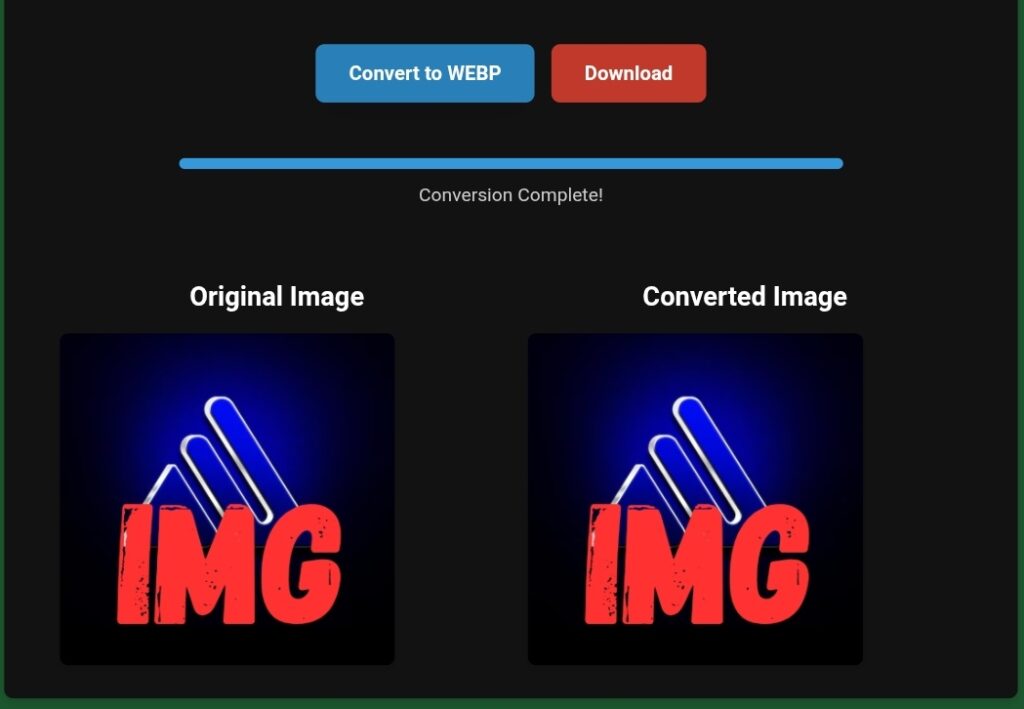
This is where the power of intelligent, automated conversion tools becomes indispensable. toolloopai.com stands at the forefront of this revolution, offering a comprehensive suite of AI-powered tools designed not merely to change file extensions, but to fundamentally enhance, optimize, and future-proof your visual assets. This exhaustive guide, exceeding 2500 words, will serve as your master resource. We will delve deep into how you can leverage modern conversion strategies—with a focus on critical tasks like converting PNG to WebP and handling PDF and SVG files—to achieve technical excellence and visual brilliance. We’ll explore the “why” behind each format, provide actionable “how-to” workflows using toolloopai, and unpack the significant impact these optimizations have on your digital ecosystem.
Part 1: The Non-Negotiable Importance of Image Quality and Performance
Before diving into tools and techniques, it’s essential to understand the monumental role images play in the digital user journey.
1.1 The Psychology of the First Impression:
The human brain processes imagery 60,000 times faster than text,Within 50 milliseconds, a visitor forms an opinion about your website. A blurry product photo, a pixelated logo, or a hero banner that staggers while loading communicates unprofessionalism and erodes trust instantly. High-quality, instantly-loading visuals, conversely, signal credibility, attention to detail, and value.
1.2 The SEO Imperative: Google’s Love for Speed and Experience
Search engine algorithms,particularly Google’s, have evolved to prioritize user experience above all. Core Web Vitals—a set of metrics measuring loading performance, interactivity, and visual stability—are now direct ranking factors. The Largest Contentful Paint (LCP), which often involves an image, is paramount.
· The Problem: A large, unoptimized PNG file can single-handedly ruin your LCP score.
· The Solution: Converting that PNG to WebP can reduce its file size by 25-35% on average, leading to faster loading, a better LCP score, reduced bounce rates, and ultimately, higher search rankings. This is not an optimization; it’s a necessity for visibility.
1.3 The Business Impact: Conversions and Engagement
For e-commerce,the correlation is stark: higher-quality images lead directly to higher sales. Customers cannot physically touch a product; they rely on visuals. Multiple angles, zoom capabilities, and flawless presentation reduce purchase anxiety. Furthermore, on social media and content platforms, algorithms are designed to promote content that keeps users engaged. Crisp, clear, and fast-loading images and videos receive more shares, likes, and comments, creating a powerful positive feedback loop for your reach.
1.4 The Versatility Challenge: One Asset, Multiple Uses
A modern brand needs its visual assets everywhere:a logo on a website (SVG), in a printed brochure (PDF), on a social media profile (PNG/JPG), and as a favicon (.ico). Manually recreating or exporting for each use case is inefficient and risks inconsistency. Intelligent conversion tools bridge these gaps, ensuring your brand identity remains sharp and cohesive across all mediums.
Part 2: Decoding the Digital Image Lexicon: PNG, WebP, SVG, and PDF
To make intelligent decisions, you must understand the strengths and weaknesses of each major format.
2.1 PNG (Portable Network Graphics)
· Primary Use: The go-to format for graphics requiring transparency (like logos without a background), screenshots, and images with text or sharp edges.
· Strengths: Lossless compression, excellent detail preservation, and full alpha-channel transparency support.
· Critical Weakness: File sizes can be very large, especially for complex images. This makes PNG a poor choice for general website photography where speed is key.
· The toolloopai Solution: The PNG to WebP converter. WebP can also support transparency (both lossless and lossy) while delivering drastically smaller files, making it the superior modern successor for web use.
2.2 WebP (The Modern Web Champion)
· Primary Use: The universal format for images on the web. Created by Google to provide superior compression.
· Strengths: It employs both predictive (lossy) and entropy (lossless) coding. The result? It consistently creates files 25-35% smaller than JPEG and up to 80% smaller than PNG while maintaining comparable or better quality. It supports animation and transparency.
· Weakness: While support is nearly universal in modern browsers, legacy systems (like very old Internet Explorer) may not display it. This is easily solved with fallback code in HTML.
· The toolloopai Advantage: Using toolloopai’s AI-powered conversion, the process from PNG to WebP or JPG to WebP isn’t just a straight conversion. The AI can intelligently analyze the image to apply the most efficient compression strategy, preserving critical detail in complex areas while aggressively compressing simpler ones.
2.3 SVG (Scalable Vector Graphics)
· Primary Use: Logos, icons, illustrations, diagrams, and any graphic defined by points, lines, and curves rather than pixels.
· Strengths: As a vector format, it is infinitely scalable without any loss of quality. It is typically very small in file size and can be styled and animated with CSS.
· Weakness: Not suitable for complex photographs. Requires specific handling for web use and often needs conversion for print or document embedding.
· The toolloopai Workflow: Converting an SVG to PDF is a common need for print-ready materials. toolloopai ensures this conversion rasterizes the vector art at a high enough resolution (e.g., 300 DPI) for professional printing, all within a universally accepted PDF container.
2.4 PDF (Portable Document Format)
· Primary Use: A document container format designed for consistent presentation across devices and operating systems. It is the standard for printable documents, forms, and portfolios.
· Strengths: Universal compatibility, preserves fonts and layout exactly as intended, and can contain a mix of vector and raster graphics.
· Weakness: PDFs are not native web image formats. Graphics trapped inside a PDF often need to be extracted and optimized for web use.
· The toolloopai Role: Tools that can convert from PDF to PNG or PDF to JPG are essential for extracting logos, diagrams, or illustrations from documents to be reused on the web, where they can then be further optimized (e.g., to WebP).
Part 3: toolloopai.com Demystified: The AI-Powered Optimization Engine
What sets toolloopai.com apart in a sea of online converters? It is the integration of artificial intelligence that transforms simple format switching into genuine quality enhancement.
3.1 The Core Philosophy: Enhancement, Not Just Conversion
While many tools simply repackage pixels,toolloopai’s AI models are trained to understand image content. When you convert a PNG to WebP, the system doesn’t just apply a standard algorithm. It can:
· Perform intelligent denoising, smoothing out graininess in photos.
· Apply selective sharpening to enhance edges without creating artifacts.
· Optimize color profiles for web display.
· Choose the optimal compression ratio for different parts of the image.
3.2 Key Platform Features and Benefits:
· Comprehensive Format Support: A full suite of converters covering all critical paths: PNG to WebP, JPG to WebP, SVG to PDF, PDF to JPG, WebP to PNG, HEIC to JPG, and more.
· AI Image Upscaler: This standalone tool is a game-changer. It can intelligently increase the resolution of low-quality images by reconstructing detail, making old photos or small web graphics usable for larger displays.
· Batch Processing Capability: For developers or site administrators needing to convert an entire library of PNG to WebP, batch processing saves hours of manual work.
· Privacy-Centric Design: Files are processed on secure servers and are typically deleted shortly after conversion, ensuring your proprietary images and documents remain confidential.
· Accessibility and Cost: The platform is web-based, requiring no downloads, and offers robust functionality for free, making professional-grade optimization accessible to everyone.
Part 4: Actionable Workflows: Step-by-Step Guides to Real-World Optimization
Let’s translate theory into practice with detailed workflows using toolloopai.com.
Workflow 1: The Website Speed Overhaul (PNG to WebP at Scale)
Scenario:You’ve audited your website with Google PageSpeed Insights and found that large PNG images are the primary cause of slow LCP times.
1. Audit: Use a plugin or crawler to list all PNG files on your site.
2. Prepare: Organize images into folders (e.g., /product-images/, /blog-assets/).
3. Convert: Navigate to the PNG to WebP converter on toolloopai. Utilize the batch upload feature to process entire folders.
4. Download & Archive: Download the converted WebP files. Keep the original PNGs in a separate archive as a backup.
5. Implement: Replace the src attributes in your HTML from .png to .webp. Use the <picture> element with a fallback to .png for maximum browser compatibility.
6. Verify: Re-run the PageSpeed audit. You should see a dramatic improvement in your performance score and a reduction in page weight.
Workflow 2: Creating a Print-Ready Brand Package (SVG to PDF)
Scenario:Your designer sends you the new company logo as an SVG. You need to provide it to a printer for business cards and to a merchandise vendor for t-shirts.
1. Source File: Ensure you have the final, approved SVG file.
2. Convert for Print: Go to the appropriate converter on toolloopai (often an image to PDF tool that supports vectors). Upload the SVG.
3. Configure (if options exist): Select a print-ready resolution (e.g., 300 DPI). Ensure the output PDF has a “Crop Box” or “Art Box” that tightly fits the logo.
4. Generate and Download: Process the file and download the resulting PDF.
5. Deliver: This single PDF file can now be sent to any professional printer with the confidence it will output at the highest possible quality.
Workflow 3: Rescuing and Repurposing Legacy Assets
Scenario:You only have a small, low-resolution version of your logo, or an old product photo from a PDF catalog.
1. Extract: If the asset is in a PDF, use toolloopai’s PDF to JPG/PNG tool to extract it at the highest possible resolution.
2. Enhance: Feed the resulting low-res image into the AI Image Upscaler. Choose a 2x or 4x enhancement to intelligently increase its size and add detail.
3. Optimize: Take the newly upscaled image and run it through the PNG to WebP converter for final web use, or through the image enhancer to correct color and contrast.
Part 5: Beyond Conversion – Strategic Best Practices for Digital Assets
Integrating these tools into a sustainable strategy is key.
5.1 The Modern Web Image Pipeline:
1. Capture/Create at the highest possible quality.
2. Edit & Retouch in your primary software (e.g., Photoshop, Figma).
3. Export for Web: Use toolloopai to convert the final edit (likely a PNG or large JPG) to WebP.
4. Implement with Modern HTML using the <picture> element.
5.2 Naming and Organization:
Adopt a clear naming convention that includes the format(e.g., product-hero-image.webp, logo-main.pdf, icon-phone.svg). This simplifies management for teams.


5.3 Continuous Monitoring:
Website performance is not a”set and forget” task. Use monitoring tools to track your Core Web Vitals over time. As you add new content, pre-optimize it through toolloopai before upload.
Part 6: The Future of Image Optimization: Where AI is Leading Us
Platforms like toolloopai.com hint at the future, where AI will manage our entire visual asset lifecycle.
· Fully Automated Optimization: CMS plugins will automatically convert every uploaded image to the ideal format (WebP, AVIF) and resolution for its specific use case.
· Context-Aware Enhancement: AI will not just upscale, but will understand that an image contains a face, a landscape, or text, and apply bespoke enhancement models for each.
· Dynamic Image Serving: Based on the user’s device, network speed, and viewport size, servers will deliver a dynamically generated, perfectly optimized image in real-time.
Conclusion: Empowering Your Digital Presence with Intelligent Tools
The journey from a raw, unoptimized image to a sleek, fast-loading, and versatile visual asset is no longer fraught with complexity. By understanding the strategic role of formats like WebP, PNG, SVG, and PDF, and by harnessing the AI-powered conversion and enhancement capabilities of toolloopai.com, you gain a formidable competitive edge.
You are equipped to directly improve your website’s search engine rankings, enhance user engagement, drive higher conversions, and maintain a consistent, professional brand image across all platforms. The tools are here, the processes are clear, and the impact is measurable. Stop letting unoptimized images hold your digital potential back. Embrace the modern workflow of conversion and enhancement, and watch as your online presence transforms in both speed and stature. Visit toolloopai.com today to begin your optimization journey.
Toolloopai.com and CloudConvert both offer online file conversion, but their focus and user experience differ significantly. CloudConvert is a versatile multi-format converter, supporting documents, videos, and images, yet many of its advanced features require paid credits. In contrast, toolloopai.com specializes in modern image conversion and enhancement, providing faster processing, cleaner outputs, and AI-powered quality improvements. While CloudConvert mainly converts formats, ToolloopAI enhances images, reduces noise, sharpens details, and supports cutting-edge formats like WebP and AVIF with minimal quality loss. It also offers a simpler interface, no watermarks, and completely free access to essential tools. For users seeking higher image quality, AI enhancement, and optimized web-ready formats, toolloopai.com delivers superior value.